Saturday, August 22, 2009

7724: Downtown ATL

I'll be in Atlanta, Georgia for a week. I heard that there is nonstop rain on Saipan tonight because of a small storm in the east. There was a thunder storm last night here but not a whole lot of rain downtown. I feel the jet lag pretty bad, but I hope I can function well nonetheless. Okay, I better take another nap.

Ti napu.

The Beachcomber

Beachcombing

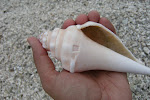
I didn't plan on doing some beach combing the other day and it was a pleasant surprise that the excursion turned up some real good specimens for my shell collection. I was sorting, cleaning, bagging and tagging my specimens when I realized that I have never posted an actual beach combing blog. How funny is that? Anyway, this is what your Beachcomber does when he can in his free time: beachcomb for shells for a biodiversity working collection.

You can get a permit at CNMI Division of Fish & Wildlife if you want a shell collection. Also remember that the wildlife and natural resources of this world have been entrusted to us for protection and preservation. We all must account to the future for how we handle resources today and if you decide to collect shells it must be done lawfully, conservatively, recognizing that destruction of the marine habitat, by whatever means, is the true enemy of the sea and its creatures. You can read and take the Sheller's Creed.

Abalones (Family Haliotidae) get quite big in colder waters, but in the Marianas they are quite small. Their modest size do not detract from the beauty of these shells though as you can see from the nacre or mother of pearl in the opening where the animal used to live. These are Haliotis clathrata, common name Lovely abalones (Reeve, 1846) and you can find them between 10-60 mm in size.
Here are two samples that are new to me! Part of the dream of all beachcombers is to discover something new and undescribed and be able to name it yourself! Well, my best friend actually found the one that looks like a sundial (most likely of the Architectonicidae family) so she will have to name it! I will have to check if it is Heliacus caelatus as described by Hinds (1844). Here are new limpets to my collection that have a nice yellow tint to them. These gastropods or marine snails are usually found attached to rocks with the exposed surface covered in encrustations. When the animal dies the shell gets polished by the water, sand and waves and they show off wonderful architecture and amazing patterns of color. They're in the Patellidae family.
Found some cool spines of Eucidaris metularia (Lamarck, 1816), the Ten-lined sea urchin. Although I have never seen them in the water, their spines are a pretty good clue that they are around!
Another candlenut or kukui (Aleurites moluccana). I still haven't found a live tree on Guam and the CNMI! Could the seed have traveled the seas from Polynesia? Or from Malaysia or Indonesia? It's possible but I am still crossing my fingers that there are trees here.
I found some Star sand and what I call Halo sand. They are foraminaferans (or forams for short) which are actually marine protists that are big enough to see with the naked eye. The circular Halo sand are Marginopora vertebralis, calcareous and they contribute to the sand makeup when they die.
Some Japanese islands are famous and are marketed to tourists for their star sand. We should too since they are pretty abundant in a lot of our beaches. Read about the star sand legend here. I'll be sending some samples to Bev and Greg since the two have become psammophiles (sand collectors). They are putting together a nice Leica camera and and an old microscope together. I hope I can send them some of my microshell collection to photograph as well that I can show you.
Thank you for letting me share again.

Ti napu.

The Beachcomber

Tuesday, August 18, 2009

Ingredients 2: I finished the adze

This is an update of my Ingredients post which was about putting together the items and the skills necessary to put together a replica of an ancient Chamorro adze. I'm happy to say that I am finished with the first and made another. I am still looking for ways to improve their construction and quality though. These tools are intended as replicas and for display only of course.
It took some time, research and a lot of trial and error but I am happy with the final products shown here in a couple of pictures. I remain amazed at how the ancient people manufactured these implements without the use of the modern tools. Although I used saws, electric grinders and polishers, sand paper, and anything convenient to cut, shape and bind, I believe I shared with them a very deep personal experience in crafting these tools.
This is Higam hima: Hacha (higam: adze, hima: giant clam, and hacha: one). This was my first attempt hence hacha, the ancient Chamorro word for one. In the Ingredients post about the adze, I referred to them as gachai, the name that was in the Chamorro-English Dictionary (Topping, Ogo, & Dungca). I found out later that gachai is from the Spanish word hacha that means adze or ax. So it is kind of funny that hacha means both adze and one! I will use higam hima from now out of respect and acknowledgment of the ancient language.
I kept the handle long for Hacha just to give it a more interesting character. I wound the binding on the handle where it is at most balanced to hold as a tool. Here are some details to the binding of the head of the tool.
Here's a top and bottom views to show the niyok (coconut) sennit binding and the hima blade.
Can you see the fine grain pattern of the niyoron (Cordia subcordata) wood? Niyoron is not a very hard wood but I wanted to use it for this project to bring awareness to its existence and importance as a native tree to the CNMI. Being so Flame Tree-centric, I bet you can ask many locals about niyoron and you would get a puzzled look not lot of information. You can probably blame this mostly on the lost carving traditions of the ancients. We need to be more aware of our native and endemic trees to appreciate them.
I really enjoyed the act of binding with the coconut sennit. The binding is the hardest step in all, and making rope is even harder. No, I didn't make the sennit but I am researching how it is done. I'll post a little later on how to make cords out of natural fibers. Here you will find a nice story put together by the Pacific Arts Magazine on traditional canoe making in the Solomons which has a small description of how coconut sennit is made.
There are many techniques to binding, such as being able to secure and hide the ends of the sennit. I spent a good deal of time looking for information in the absence of actual instructions in binding these tools. All the hard work pays of in the end though!This is Higam hima: Hugua (or two in the ancient Chamorro language). I salvaged the handle from a niyoron tree that was indiscriminately cut down to make room for one of Saipan's many strip malls. Guess what they have there now? You guessed right if you said pawn shop and video poker arcade!

The handle of Hugua is not as straight as Hacha giving it a much different look and balance. Hugua is a reminder to me that we must remain vigilant in preserving the natural environment against careless sprawl. Here are some head shots.

The limb of the wood that I used had a neat knot that I kept for the final product to retain a bit of that interesting character.
Below is another view that shows the fine grain of the wood on Hugua. For both higam I opted to keep them very simple and not adorn them with carvings or inlays to emphasize look of the raw materials. I kept the sanding of the wood a little on the rough side and finished it with tung oil to preserve the original grain quality. I also used a little wood glue just enough so that is retained in case the sennit unravels because of mishandling or dropping. I assume that natural gums or sticky saps were used in the past for this purpose anyway but did not experiment with those at this time.
I really want to put Hacha yan Hugua in the art show at Joeten Motors in September. I hope I have enough time to put together a few other crafts and illustrations to share. I hope you like the two adzes and thank you for allowing me to share with you my creative journey in making them.

Ti napu.

The Beachcomber

Monday, August 3, 2009

Fantastical Story: The Hero Tee

My best friend has told me that some of my stories are so fantastical that she doubts that they are real. Well, you’ll just have to take my word for this one because I didn't have company and although witnessed by a dozen plus people, I do not know any of them who can authenticate the following events:
It was a Saturday morning, and even though I felt awesome in my new superhero shirt and Heeleys, I was a bit annoyed as I walked into the Dededo Payless Market. Not only was the flea market outside going on full scale (making it hard to find a parking space), the bank inside has not yet opened. This meant that another crowd was waiting for me in the store. “Why did I run out of deodorant today of all days,” I asked myself. “Never mind” I thought, “What matters is that I I look cool with my superhero shirt!”

The automatic doors opened, and I was immediately overwhelmed by the sight of the crowd whose line already doubled up in the small market. I squeezed in between people looking for the best path to Isle 5 where all the deodorants were. “Where did all of these people come from?” I finally reached the products, quickly looked for my brand and the one scent that did not make me sneeze.

“Good! There is a cashier that’s free!” As I walked in her direction to check out, there was a sudden commotion in the crowd of people lined up for the bank. I heard a couple of people say, “Oh, my God” and the crowd cleared some space revealing a woman on the floor. Her eyes were rolled back and as she convulsed uncontrollably. All of the onlookers seemed frozen in time just staring at the woman having a seizure attack.

I had to do something. My heart was pounding hard against my chest as my hand involuntarily felt the emblem on my shirt. By now there was a clear path between myself and the woman in distress. I launched myself on the wheels of my Heeleys in her direction and I was on her in a blur. Kneeling on one knee over the woman, I announced to the crowd that I was trained in first aid. “Please back off and give us some space. You with the red hat,” I pointed at the bagger closest to the phone, “Call 911 now and say seizure!” “Everyone, she’ll be okay!”
In a few moments, the woman had stopped convulsing and slowly started to regain her consciousness. “What happened?” she asked looking up at me with glazed over eyes. “Ma’am, I think you just had a seizure. How do you feel?” “Oh. I’m okay. I want to sit up.” I motioned to someone from the crowd to bring one of the bank chairs and I helped the woman slowly on to it. Someone gave her bottled water. “Ma’am, we’ve already called the ambulance. Do you need anything else?” I asked. “I didn’t take my medicine this morning, I think I need to get it from my car.” “I’ll let the EMS know, ma’am.”

The ambulance finally came and two EMS personnel brought in their equipment and a stretcher. I briefly recounted what had happened as they started taking the woman’s vital signs. I knew that my job there was done, so I started turning away to let the EMS take over. As I was walking away, the woman called out to me saying, “Thank you, my boy! Thank you for everything!”

Looking back, I smiled and winked at her saying, “You are welcome!” as I rolled away on my Heeleys. As I exited the store out of sight, I overheard someone say, “Who was that guy?”

Moosejaw is having the Devon Island Tee Shirt Stories Contest Thing. You can email them "some amazing or even decent story meant to inspire a tee shirt design". You will get 100 Moosejaw Points for a submission and the winning entry will be made into a tee, name the tee after the winner or the story plus 10,191 Moosejaw Points "which is like $101.91 to spend at MoosejawRewards.com". I'll turn in my story (minus the brand names) to see if I can generate another fantastical story out of it.

Ti napu.

The Beachcomber

Wednesday, July 22, 2009

Eugenia Update: Why Plant Native Trees?

I blogged earlier about Agatelang (Eugenia palumbis) when these native trees were in bloom. In June, they started fruiting and I just wanted to share a couple of pictures of what their berries look like. I still want to urge you all to plant more native trees in the CNMI and I hope you can see from these pictures that they are just as attractive as introduced species used as ornamentals in landscaping.I took my friend Julianne from Hawai'i around the island for sight seeing and we spotted a fruiting Agatelang at the Bird Island lookout. The taste reminded me of the spicy sweetness of Pitanga or Surinam Cherries (Eugenia uniflora) but just a little blander. Thank you for the pictures, Jules!

WHY CONSIDER PLANTING A NATIVE TREE?

  • Planting a native tree is a gift to wildlife, your island and the Earth.
  • You nurture local biodiversity.
  • Native trees are beter adapted to your island’s weather, soil and other environmental conditions.
  • They provide the best native wildlife habitat.
  • They are more resistant to insect and disease attacks, and are less likely to be stressed than non native plants.
  • Local plants are adapted to local conditions and often have lower maintenance requirements, such as little or no fertilizers.
  • Native trees and plants are a link to your island’s natural heritage.
  • Many introduced plants or non natives offer less value to our native wildlife.
  • Native trees and plants are the backbone of the island wildlife's food chain because native insects, birds and other animals have evolved with them and find it hard to survive without the food and shelter they provide.

Well, I hope you enjoyed this post. I also hope you will join me in planting more native trees on our islands.

Ti napu.

The Beachcomber

Tuesday, July 21, 2009

Solar eclipse

Today in the CNMI, we get to experience a partial solar eclipse. An eclipse of the sun occurs when the Moon passes between the Earth and the Sun. For a short period of time the Moon will block the Sun from view briefly making it seem as if the day turned into night.

Today’s eclipse is one of the longest of the 21st century occurring approximately at 10:55 AM until 1:30 PM (The point of total eclipse lasted 6 minutes and 39 seconds!). This duration is because the Moon is on on its axis to the Earth that is in periapsis or, its closest approach to the Earth. The apparent diameter of the moon is 8% larger than the sun when we view it on Earth. This particular partial eclipse is an annular eclipse, where the moon blocks out all but a small outer rim of the Sun.

The last time we in the CNMI experienced a solar eclipse was the annular solar eclipse of June 11, 2002. The Moon will start obscuring the Sun on Saipan at 11:24 PM and will obscure 77.1% at the most around 12:53 PM. Tinian will have 76.2%`Sun coverage and Luta with the least at 72.1% at the same time.

From the Saipan Tribune: The path of the total eclipse will traverse across the North Pacific Ocean and will include the 14 islands of the CNMI. According to the NASA Web site, the path of the Moon’s umbral shadow will begin in India and cross through Nepal, Bangladesh, Bhutan, Myanmar and China. After leaving mainland Asia, the path will cross Japan’s Ryukyu Islands and curve southeast through the Pacific Ocean where the maximum duration of totality reaches 6 minutes 39 seconds. A partial eclipse will be seen within the much broader path of the Moon’s penumbral shadow, which includes most of eastern Asia, Indonesia, and the Pacific Ocean. Also, tips for safely viewing the eclipse are found here.

From Wikipedia.com: Totality will be visible in many large cities, including Surat, Vadodara, Bhopal, Varanasi, Patna, Dinajpur, Siliguri, Tawang, Guwahati, Chengdu, Nanchong, Chongqing, Yichang, Jingzhou, Wuhan, Huanggang, Hefei, Hangzhou, Wuxir, Huzhou, Suzhou, Jiaxing, Ningbo and Shanghai, as well as over the Three Gorges Dam. According to some experts, Taregana in Bihar is the "best" place to view the event.
This picture of an eclipse cycle is from here and it occurred in Adrasan, Turkey and was captured there by awesome professional astrophotographer Stefan Seip of Stuttgart, Germany. During the 2002 eclipse, my friends on Guam and I kept emailing and updating each other on a chat line about what we were seeing. My friend Bobat wrote, "Yoda says, 'Look not at the Sun directly, or blind you will be!'" That guy cracks me up!

I am sorry but I do not have any photo equipment that can take actual photos of the eclipse but here's a play by play:
11:10 The Sun is still complete.
12:00 The obstruction is like the 4th picture from the right of Stephan Seips photograph.
12:15 The obstruction looks like the 5th picture now. The shadow is moving pretty fast!
12:30 We're on the 6th picture now.
12:45 Still on 6th.
12:50 7th!!!
12:59 This is as "total" as were supposed to get: 7th!!!
13:15 Slowly going back to normal. Back to 6th.

Well, that was pretty cool. Thanks for sharing in all the astronomical excitement.

Ti napu.

The Beachcomber

Thursday, June 25, 2009

Long Live the King

I am sad to hear that the King of Pop, Michael Jackson has passed away at 50 years of age. There are no details yet about his death, but I just feel really bummed that an icon of the music era that I grew up in passed away at such a young age. Sure there were questions and controversies surrounding his life, but I can never forget being amazed by his talent as a singer, dancer and songwriter.


Long Live the King! Rest in peace, MJ. Thank you.

Ti napu.

The Beachcomber